
Grand Army Plaza: Brooklyn’s Majestic Gateway to History, Culture, and Community
In the heart of Brooklyn, where history meets modern city life, stands one of New York City’s most iconic and meaningful public spaces: Grand Army Plaza. Often described as the ceremonial entrance to Prospect Park, Grand Army Plaza is far more than just a traffic circle or landmark. It is a living monument to history, a gathering place for the community, a hub of art and culture, and a vibrant symbol of Brooklyn’s identity.
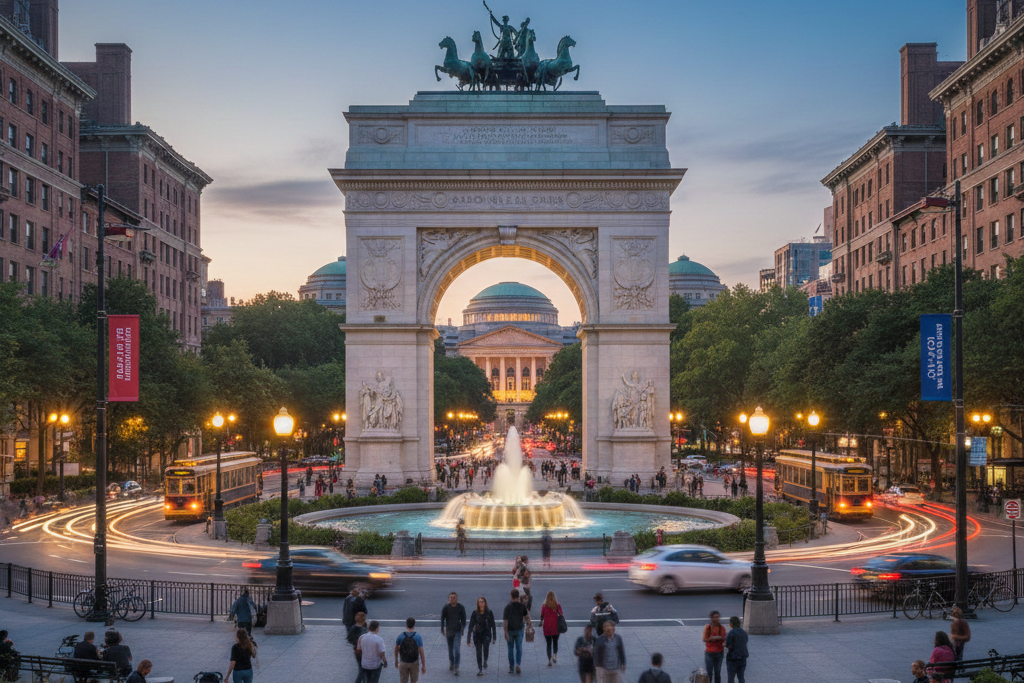
From its towering Soldiers’ and Sailors’ Memorial Arch to its weekly farmers market and seasonal celebrations, Grand Army Plaza offers visitors a powerful mix of grandeur and everyday charm. Whether you are a first-time tourist or a longtime New Yorker, exploring this historic plaza reveals layers of stories woven into the fabric of Brooklyn.
This blog takes you on a deep journey into the history, design, cultural significance, and modern life of Grand Army Plaza—an enduring centerpiece of Brooklyn.
The Origins of Grand Army Plaza
Grand Army Plaza was designed in the late 19th century as part of a larger vision to create grand public spaces in Brooklyn. At that time, Brooklyn was still an independent city (it did not become part of New York City until 1898), and civic leaders wanted a monumental entrance to Prospect Park, much like Manhattan’s grand approaches to Central Park.
The plaza was originally known as Prospect Park Plaza when it was designed in 1867 by Frederick Law Olmsted and Calvert Vaux, the same visionary landscape architects behind Central Park. Their goal was to create an impressive yet harmonious entrance to the park that would balance beauty, accessibility, and public function.
Later, the plaza was renamed Grand Army Plaza in honor of the Grand Army of the Republic, a Union veterans’ organization formed after the Civil War. The renaming reflected Brooklyn’s strong connection to Civil War history and its desire to commemorate the sacrifices made during the conflict.
The Soldiers’ and Sailors’ Memorial Arch: A Monument of Honor
The most striking feature of Grand Army Plaza is the magnificent Soldiers’ and Sailors’ Memorial Arch. Completed in 1892, the arch was designed by architect John H. Duncan, who also designed Grant’s Tomb in Manhattan.
Inspired by the Arc de Triomphe in Paris, the arch stands as a tribute to Union soldiers and sailors who fought in the Civil War. Its grandeur immediately commands attention. The arch is constructed from granite and adorned with sculptural reliefs that depict scenes of battle, triumph, and sacrifice.
At the top of the arch stands the powerful bronze sculpture titled “Triumph of the Union” by Frederick MacMonnies. The sculpture features Columbia, the female personification of the United States, riding a chariot drawn by horses. She is accompanied by figures symbolizing victory and courage.
At the base of the arch, sculptural groups represent the Army and the Navy, emphasizing the dual branches honored by the monument. These figures convey both strength and solemn remembrance, grounding the monument in a sense of dignity and historical gravity.
The arch is not merely decorative—it is deeply symbolic. It reminds visitors of the cost of freedom and the importance of unity. Over the decades, it has become one of Brooklyn’s most recognizable landmarks.
A Gateway to Prospect Park
Grand Army Plaza functions as the grand entrance to Prospect Park, Brooklyn’s beloved 585-acre green oasis. The plaza acts as a transitional space between bustling city streets and the peaceful landscape of the park.
Frederick Law Olmsted and Calvert Vaux designed Prospect Park as a natural retreat from urban life. Grand Army Plaza was meant to prepare visitors for that transition. The open circular design, the monumentality of the arch, and the radiating streets all create a sense of arrival.
When you walk under the arch and continue into Prospect Park, you experience a deliberate shift—from stone and structure to greenery and open skies. This architectural choreography makes the plaza feel like a ceremonial threshold between city and nature.
The Bailey Fountain: Beauty in Motion
Another major feature of Grand Army Plaza is the Bailey Fountain, installed in 1932. Located in the center of the plaza, this elegant fountain adds movement and serenity to the space.
The fountain’s centerpiece is a bronze figure of a nude male representing wisdom and strength, surrounded by playful sea creatures and decorative elements. The flowing water provides a calming contrast to the surrounding traffic and urban activity.
The fountain has undergone restoration over the years, ensuring that it remains a functional and aesthetic highlight of the plaza. Especially during warmer months, the fountain serves as a refreshing focal point for visitors.
Urban Design and Architectural Harmony
Grand Army Plaza is not a simple square—it is a large circular plaza with multiple roadways radiating outward like spokes. These roads connect various Brooklyn neighborhoods, including Park Slope, Prospect Heights, and Flatbush.
The circular layout creates a sense of grandeur while also managing the flow of traffic. Though busy, the plaza maintains pedestrian walkways and landscaped islands that allow visitors to safely explore the monument and surrounding features.
Architecturally, the plaza blends Beaux-Arts grandeur with urban functionality. The monumental arch anchors the space, while surrounding buildings and streets provide context and liveliness. This combination of formality and practicality reflects late 19th-century urban planning ideals.
A Center of Community Life
While Grand Army Plaza began as a commemorative monument and formal entrance, today it serves as a vibrant community gathering space.
The Greenmarket
One of the most beloved features of Grand Army Plaza is the weekly Greenmarket, held every Saturday. This farmers market attracts local farmers, bakers, and artisans from across the region.
Shoppers can find fresh produce, flowers, bread, cheese, meats, and specialty foods. The market transforms the plaza into a lively, colorful space filled with conversation, music, and local flavor.
The Greenmarket highlights the plaza’s modern role as a center of daily life. It connects Brooklyn residents to regional agriculture and supports small businesses.
Cultural Events and Public Gatherings
Grand Army Plaza has hosted countless events over the decades. From parades and rallies to concerts and festivals, the plaza remains a site of civic expression.
Memorial Day ceremonies often take place near the Soldiers’ and Sailors’ Arch, reinforcing the monument’s original purpose. Political rallies and cultural celebrations also gather here, demonstrating how public spaces can serve as platforms for democracy and community voice.
Seasonal decorations and holiday events add further vibrancy. During certain times of the year, the plaza becomes a festive space that brings together people from all walks of life.
The Brooklyn Public Library Connection
Directly across from Grand Army Plaza stands the Brooklyn Public Library’s Central Branch, an Art Deco masterpiece completed in 1941. Its grand façade and golden door complement the historic atmosphere of the plaza.
The proximity of the library adds an intellectual and cultural dimension to the space. Visitors can move from the outdoor monument to the world of books and ideas within moments. This combination reinforces the plaza’s identity as a place of reflection, knowledge, and community engagement.
Historical Transformations Over Time
Like many historic urban spaces, Grand Army Plaza has evolved. Over the years, traffic patterns changed, statues were restored, and public access was improved.
In the early 2000s, city officials initiated redesign efforts to make the plaza more pedestrian-friendly. Improvements included expanded walkways, safer crossings, and landscaping enhancements.
These updates aimed to balance preservation with modernization. By respecting the historic character of the plaza while adapting it for contemporary needs, Brooklyn ensured that Grand Army Plaza would remain relevant and accessible.
Art and Sculpture Beyond the Arch
In addition to the arch and fountain, the plaza features other statues and monuments.
The statue of President John F. Kennedy, added in 1965, stands as a tribute to the late president. The sculpture captures Kennedy’s youthful determination and serves as another reminder of the plaza’s commemorative nature.
Other decorative elements throughout the plaza reinforce its artistic richness. Every sculpture contributes to a narrative of national identity, civic pride, and remembrance.
A Photographer’s Dream
Grand Army Plaza is a favorite location for photographers. The monumental scale of the arch, the dramatic interplay of light and shadow, and the movement of traffic create dynamic visual compositions.
At sunrise or sunset, the arch glows warmly against the sky. During winter, snow outlines the monument’s sculptural details. In spring and summer, greenery and flowers soften the stone architecture.
The plaza offers countless angles and perspectives, making it an ideal place for both professional and amateur photography.
Symbolism and Meaning
Grand Army Plaza represents more than physical beauty. It symbolizes resilience, unity, and public memory.
The Civil War was a defining moment in American history, and the plaza’s dedication to Union soldiers reflects Brooklyn’s deep engagement with that era. The monument stands as a reminder that public spaces can carry collective memory across generations.
At the same time, the plaza embodies the democratic ideal of shared space. Anyone can walk through it, gather there, or sit quietly by the fountain. It belongs to everyone.
Visiting Grand Army Plaza Today
For modern visitors, Grand Army Plaza is both accessible and inviting. Located in central Brooklyn, it is well-connected by public transportation, including the B and Q subway lines at the nearby 7th Avenue station and other nearby transit options.
Visitors can easily combine a trip to the plaza with:
- A walk through Prospect Park
- A visit to the Brooklyn Museum
- A stop at the Brooklyn Botanic Garden
- Exploring nearby neighborhoods like Park Slope
The plaza’s location makes it a convenient starting point for a full day of Brooklyn exploration.
The Emotional Experience of the Plaza
Standing beneath the Soldiers’ and Sailors’ Arch evokes a powerful emotional response. The scale of the structure makes visitors feel small, yet connected to something larger than themselves.
You may hear the sound of traffic, the splash of the fountain, the chatter of market vendors, and the rustle of park trees all at once. These overlapping experiences create a unique urban symphony.
Grand Army Plaza captures the complexity of Brooklyn—historic yet modern, monumental yet intimate.
Why Grand Army Plaza Matters
In a city filled with iconic landmarks, Grand Army Plaza holds a special place. It may not receive as much global attention as the Statue of Liberty or Times Square, but its significance is deeply rooted in Brooklyn’s identity.
It reminds us that cities are not just buildings and roads—they are repositories of memory, culture, and community life. Public spaces like Grand Army Plaza offer opportunities for reflection, celebration, and connection.
As urban environments continue to evolve, preserving and cherishing such spaces becomes even more important.
Conclusion: The Enduring Spirit of Grand Army Plaza
Grand Army Plaza stands as a majestic gateway, a historical monument, and a living public square. It honors the past while serving the present. It welcomes visitors into Prospect Park while anchoring the surrounding neighborhoods.
Whether you come to admire the architecture, shop at the Greenmarket, attend a ceremony, photograph the arch, or simply pass through on your way to the park, the plaza leaves a lasting impression.
Its stone arch tells stories of courage and sacrifice. Its fountain reflects light and movement. Its open spaces invite gathering and conversation.
Grand Army Plaza is not merely a landmark—it is a symbol of Brooklyn’s heart.
In every season and at every hour, it continues to stand proudly, reminding us that great cities are shaped not only by skyscrapers, but by the public spaces where people come together.
And at the center of Brooklyn, Grand Army Plaza remains exactly that: a place where history, beauty, and community meet.